Using The Non-Dominant Hand In Art Therapy
Using your non-dominant hand in art therapy helps women access emotions, inner parts and healing, allowing authentic expression beyond words and self-trust.
Jean Chopping
4/24/20261 min read
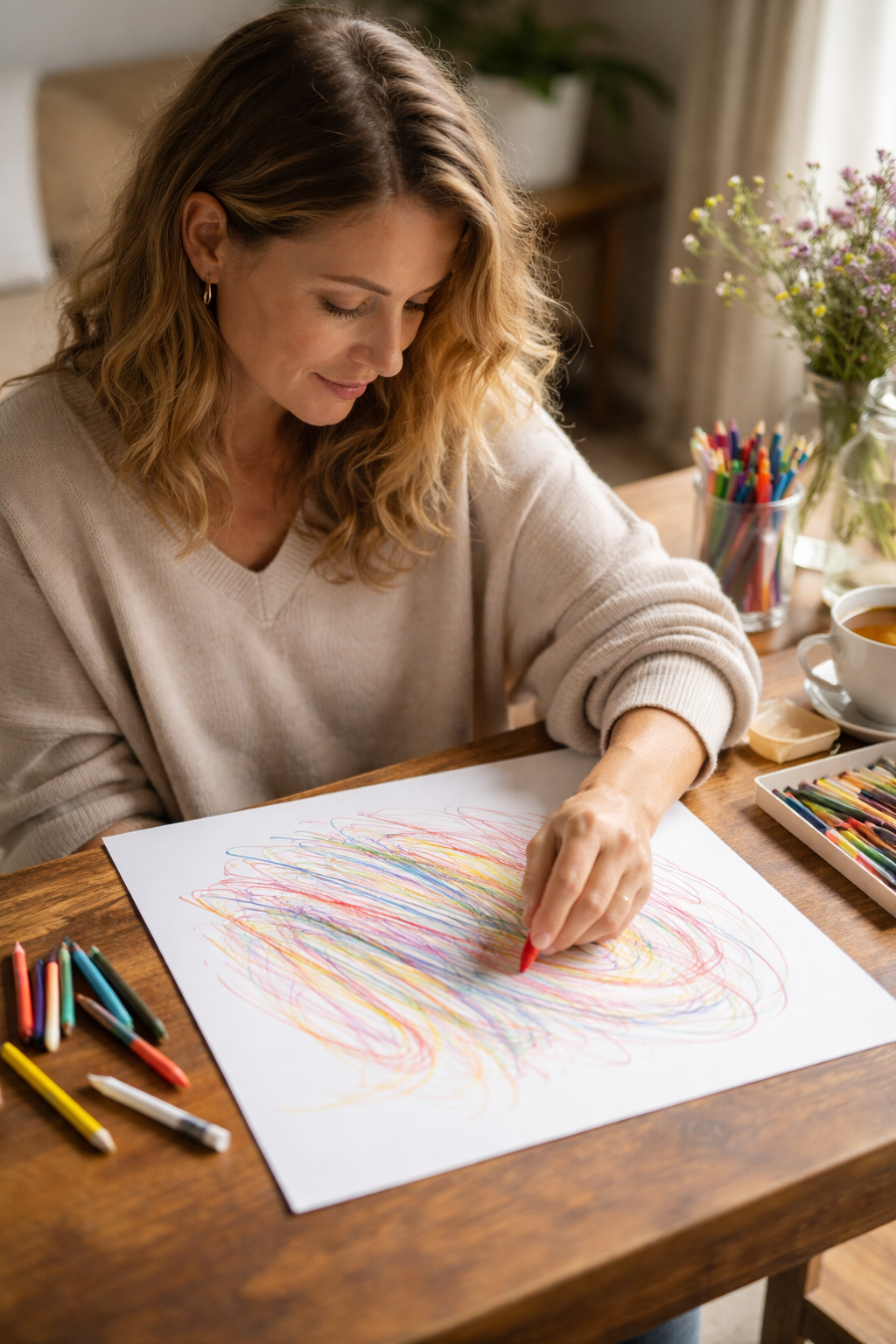
Art Therapy using the non-dominant hand.
Many women were taught either subtly or explicitly to edit themselves early. To be calm. Appropriate. Grateful. Spiritual. Strong. So feelings learned to wait their turn… or disappear altogether.
Lucia Capacchione, an expressive art therapist, discovered when we create with our non-dominant hand, we bypass the part of the brain that manages, performs, and stays in control. Capacchione’s work reminds us that the body remembers what the mind learned to forget, and sometimes healing begins not with insight, but with a shaky line made by the non-dominant hand.
What’s Actually Happening Beneath the Surface
When we use the dominant hand, we’re often operating from:
Habit
Cognitive control
Language that’s been edited, refined, and socially shaped
The non-dominant hand, however:
Moves more slowly
Feels awkward and unpolished
Bypasses internal censors
Expresses before it explains
Capacchione noticed that this hand often reveals:
Emotions we don’t yet have words for
Needs that were adapted around in childhood
Parts of self that learned to stay quiet to stay safe
This is why the drawings or words can feel surprisingly young, raw, honest, or vulnerable.
The “other hand” often speaks from:
the body
emotional memory
intuition
the younger parts of self
It doesn’t try to get it right.
This is why non-dominant hand work can feel, tender, raw, emotion and even relieving. Your emotions were never “too much.” They were simply waiting for a way to be expressed safely.
Sometimes healing begins not with insight… but with a shaky line drawn by the hand that was never trained to please.
Dialogue Between Hands is about Integration
Capacchione often invited a two-hand dialogue:
The non-dominant hand expresses the feeling or image
The dominant hand responds with care, structure, or containment
The non-dominant hand activates the right hemisphere of the brain which controls, intuition, emotions and creatvitiy. The dominant hand activates the left hemisphere of the brain which is responsible for logic, language, structure and order.
This mirrors healthy attachment:
Expression → response
Vulnerability → attunement
Feeling → meaning
It’s not about letting the inner child “run the show,” but about finally being met.
Brighter Pathways Counselling & Art Therapy
Accessible counselling and art therapy for women at home, phone or online
Contact for Support
Email: jean.c@brighterpathways.au
Mobile: 0417 362 944
© 2025. All rights reserved.
Brighter Pathways Counselling & Art Therapy acknowledges Aboriginal and Torres Straight Islander peoples as custodians of traditional land and waters of Australia. We acknowledge and pay respect to them, their cultures and Elders past and present.